OpenAI has reignited its efforts with Codex.
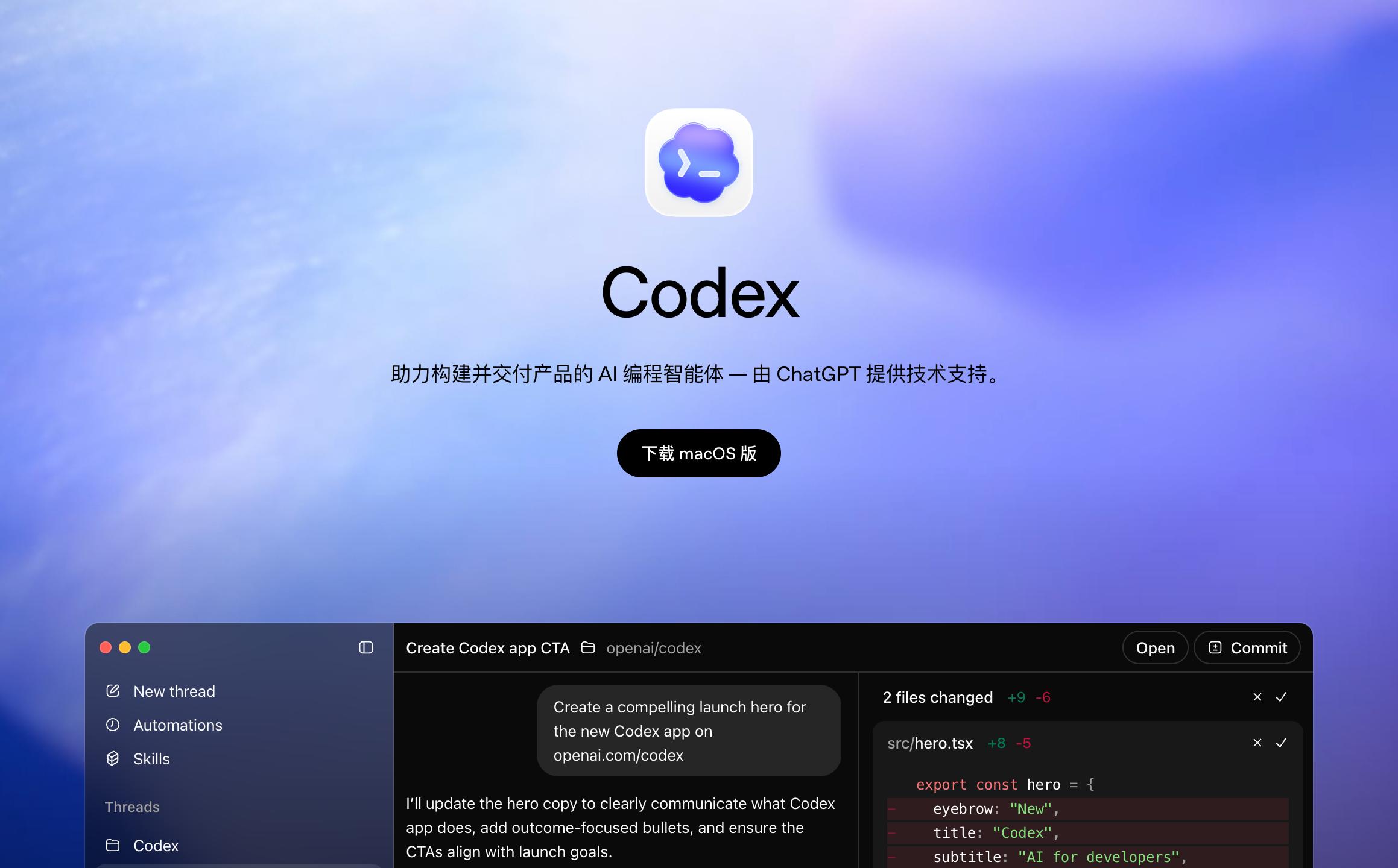
OpenAI founder and CEO Sam Altman announced on X: “Codex is the best AI Coding product, and we want to make it easy to try. Over the next 30 days, we will offer two months of free Codex usage for companies looking to switch.” Alongside this, OpenAI has launched migration tools to support seamless transitions of settings, plugins, skills, infrastructure, projects, and conversation histories.

Interestingly, around the same time, Anthropic increased the weekly quota for Claude Code by 50%, available to Pro, Max, Team, and Enterprise users, lasting until July 13.
A promotional battle between two AI giants has begun.
In recent months, Codex has helped OpenAI regain developer trust after the release of GPT-5.5, improving its capabilities in coding, tool usage, and agentic coding. Codex has also expanded beyond programming, supporting browser-based tasks, image generation, memory functions, and collaboration across tools and applications.
However, the excitement in the developer community does not fully reflect the corporate market landscape.
For OpenAI, Codex is now competing for not just individual subscriptions and reputation among developers on Reddit, X, and Hacker News, but also for the default choice of AI coding tools among enterprise clients. Currently, Anthropic’s Claude/Claude Code is leading the trend.
Codex Gains Popularity, but Claude Code Captures Enterprise Mindshare
From the comments on Sam Altman’s tweet, Codex has its supporters. In many developer communities, there is clear feedback indicating that Codex has evolved, showing significant improvements in coding, bug fixing, understanding project structures, cross-file modifications, running tests, and explaining complex engineering issues, making it comparable to Claude Code.
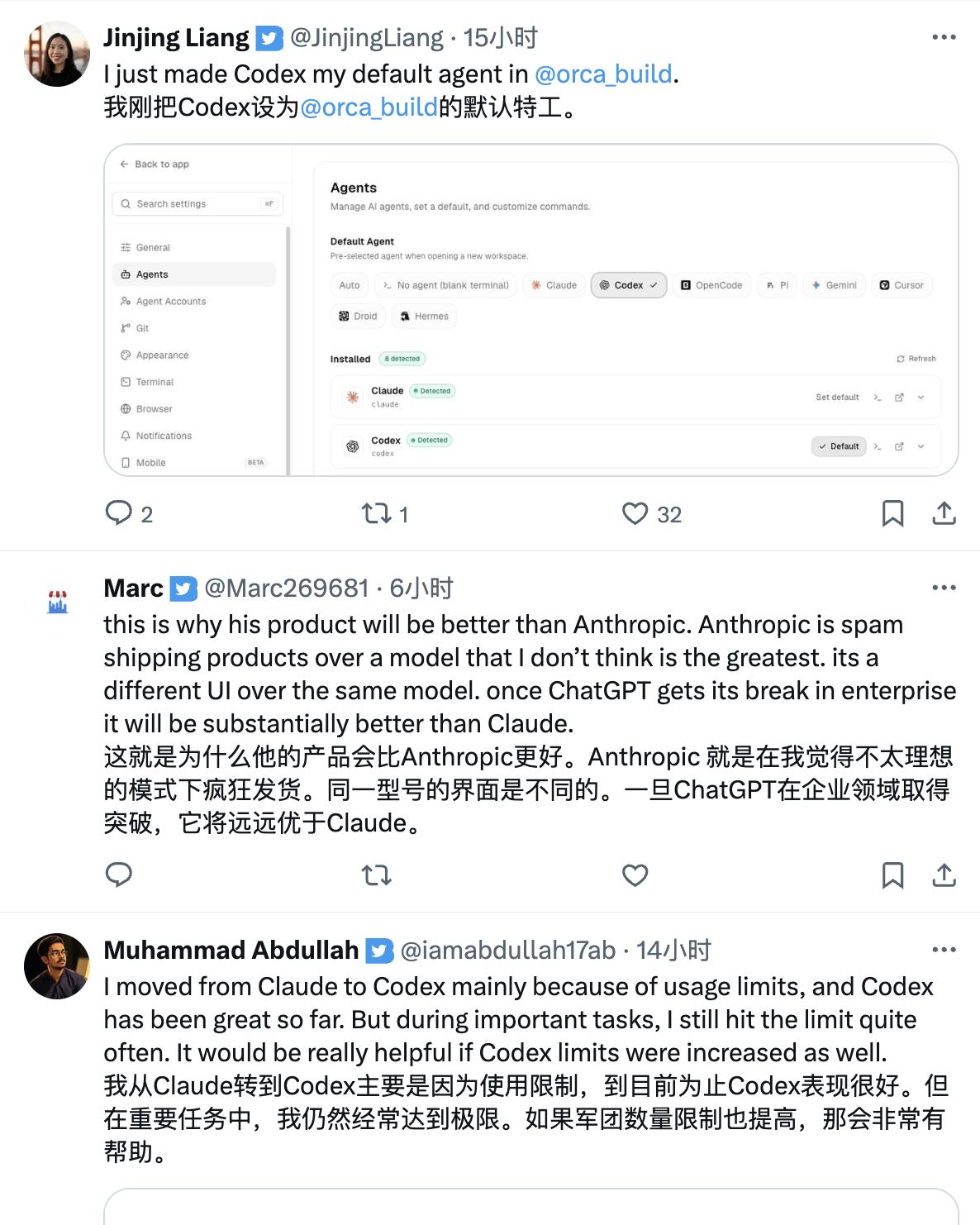
Several factors are at play here. On one hand, the release of GPT-5.5 has enhanced the model’s capabilities, making AI stronger in understanding task structures, breaking down engineering goals, tool invocation, and continuous progress. On the other hand, the new version of Codex has demonstrated similar strengths to Claude Code in AI coding and has evolved from a coding agent to a general agent.
Additionally, Anthropic has faced a computing power crisis, significantly reducing Claude Code’s quota and performance, leading to dissatisfaction among many individual and enterprise developers, making them more susceptible to Codex’s appeal.
Official data shows that in early April, Codex developer users exceeded 3 million, and with the launch of GPT-5.5 and the new version of Codex, the number surpassed 4 million by April 21.
Furthermore, data analysis platform TickerTrends reported exponential growth in npm download counts for Codex in early May, surpassing the previously dominant Claude Code. While npm download counts do not completely capture market changes, they provide a comparative indication of Codex’s strong rise.
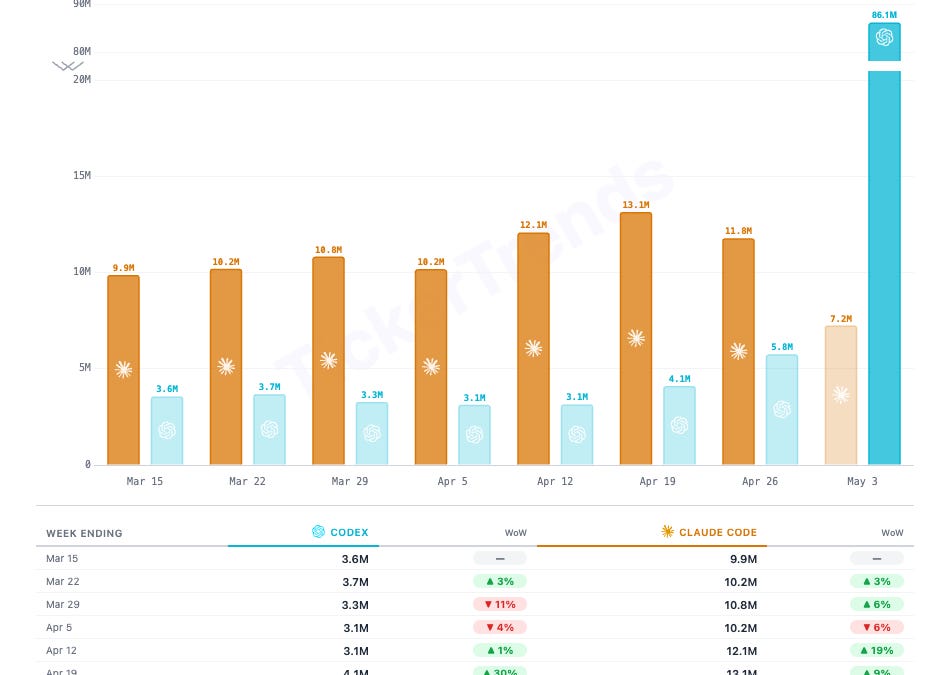
(Note: npm is the package management tool for Node.js, and products like OpenClaw, Hermes, Claude Code, and Codex often rely on the Node.js environment, but both Claude Code and Codex are gradually moving away from it.)
However, Anthropic’s lead is not only reflected in Claude (the model) and Claude Code (the product), but also in the mindshare accumulated over the past year among individual and enterprise developers. Since late last year, more enterprises have embraced Claude Code for software development, leading to a noticeable increase in its adoption rate and expansion into workflows in legal, finance, and research sectors.
Reversing this mindshare is not easy.
Data from the Ramp AI Index indicates that in April, Anthropic’s adoption rate among Ramp enterprise clients reached 34.4%, surpassing OpenAI’s 32.3% for the first time. Ramp’s metrics do not represent the entire enterprise AI market, but they reflect a portion of actual purchasing and payment behavior based on data from over 50,000 U.S. enterprises’ corporate cards and billing.
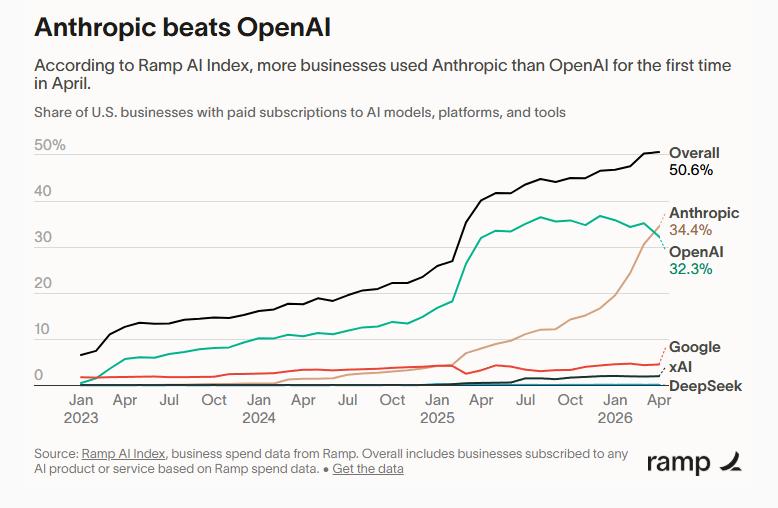
This presents a significant challenge for OpenAI. ChatGPT remains the default AI entry point for ordinary users, and OpenAI still enjoys strong brand recognition. However, in the more frequent, essential, and value-generating scenario of AI coding, Claude Code has already associated itself with being “truly capable.”
Enterprise purchasing decisions may not immediately shift with social media trends, but internal team reputation often becomes pressure in procurement decisions. As OpenAI mentioned in previous customer case studies, “Once leadership sees improvements in speed, output, and leverage within the team, Codex’s application often expands rapidly from one team to the entire company.”
From this perspective, it is understandable why Codex’s two-month free trial is a marketing strategy aimed at getting enterprises to run Codex in real projects, allowing developers to prove whether it can replace Claude Code. For enterprises, cost is not the main issue; the key is whether Codex can deliver actual output results.
Limited-Time Free Offer as a Ticket, Stability is Key
AI programming tools differ significantly from traditional SaaS in that free trials rarely create long-term competitive advantages. For enterprises, two months free is certainly appealing, especially as AI coding tools increasingly consume tokens and pilot costs become harder to predict. OpenAI’s relatively lenient trial period can at least reduce internal resistance to initiating pilots.
Ultimately, free is not a panacea. The core reason Claude Code has thrived is not due to its low cost, but because it has proven to genuinely enhance efficiency in real engineering scenarios, allowing many developers to read large projects, modify files, run commands, explain errors, and handle context. Even if it occasionally makes mistakes, users feel it is progressing towards engineering tasks.
Codex’s recent improvements indicate that OpenAI has learned this lesson. OpenAI no longer positions Codex as a lightweight tool but as a support for actual engineering work, from planning, feature development, refactoring, code review to release. The company emphasizes that Codex is a tool capable of enhancing team baseline quality, providing more thorough designs, complete testing, and accurate code reviews.
On the other hand, Claude Code is strong, but computing power is a pain point. In early May, as Codex surged, Anthropic secured all computing power from the SpaceXAI Colossus 1 super data center. Anthropic founders Dario Amodei and Daniela Amodei indicated that the company faced difficulties with computing power:
“We planned for growth from ’little’ to ‘10 times,’ but encountered ‘80 times’ growth. As you can see from our collaboration with SpaceX for computing power, we are quickly seeking more computing resources than ever before and will convert them to you as soon as possible.”

In this regard, OpenAI clearly has more robust computing power and infrastructure. However, the harsh reality of AI agents is that the better they are, the more expensive they become. Each complex task consumes a significant number of tokens, and every long context, multi-turn modification, tool invocation, and testing feedback incurs real computing costs.
This is why the free strategy is both effective and risky for AI agents. It effectively lowers the threshold for enterprises to try. As long as a few teams run it in real scenarios, they can quickly feel the tool’s impact on development efficiency, code review, and maintenance work. The risk lies in that once a large number of enterprise users start using it frequently, the demand generated by the free offer will quickly turn into pressure on computing resources.
Thus, whether the two-month free trial can be effective depends on OpenAI’s ability to maintain user experience as the user base expands. Quotas must be sufficient, responses stable, model quality consistent, and enterprise management and security capabilities must keep pace. Otherwise, the free trial may expose instability in Codex’s experience, deterring enterprise users.
For Codex to continue expanding in the enterprise market, OpenAI will likely need to decide how much reasoning resources to prioritize for Codex’s enterprise users, potentially squeezing the computing supply for ChatGPT.
In short, for Codex to win against Claude Code, it cannot rely solely on Sam Altman’s promotion on X or just the two-month free trial. It must convince enterprises that the tool is effective during the trial and that it won’t suddenly become tighter, slower, or more expensive after two months of payment. This is the most realistic barrier for Codex to reclaim enterprise clients.
Conclusion
Codex’s two-month free trial is undoubtedly an offensive move aimed at the migration window for enterprise clients. Both Claude Code’s mindshare advantage among enterprise clients and Anthropic’s lead in enterprise payment data indicate that OpenAI cannot rely solely on ChatGPT’s brand to sustain its legacy.
However, migration in the enterprise market often takes longer, especially when Claude Code has already become the default recommendation for many engineering teams. OpenAI needs more than just a promotion; it requires sustained stability over several months or even longer. A free trial may help enterprises step through the door, but the real reason they stay is simple: can it consistently write good code, fix problems, and free teams from repetitive labor without making quotas and costs a new source of anxiety?
In summary, the battle from AI Coding Agent to AI Agent has brought OpenAI back to the table, but pulling Claude Code down from its default position in developers’ minds is just the first step. The real challenge lies in ensuring enterprises are willing to continue paying after the trial ends.
Comments
Discussion is powered by Giscus (GitHub Discussions). Add
repo,repoID,category, andcategoryIDunder[params.comments.giscus]inhugo.tomlusing the values from the Giscus setup tool.